Section 1: The Core Triple Threat — What Does Full Coverage Auto Insurance Cover?
To accurately answer what does full coverage auto insurance cover, we must break it down into its three primary pillars. In 2026, most lenders and savvy drivers consider a policy “full” only if it includes these three specific components.
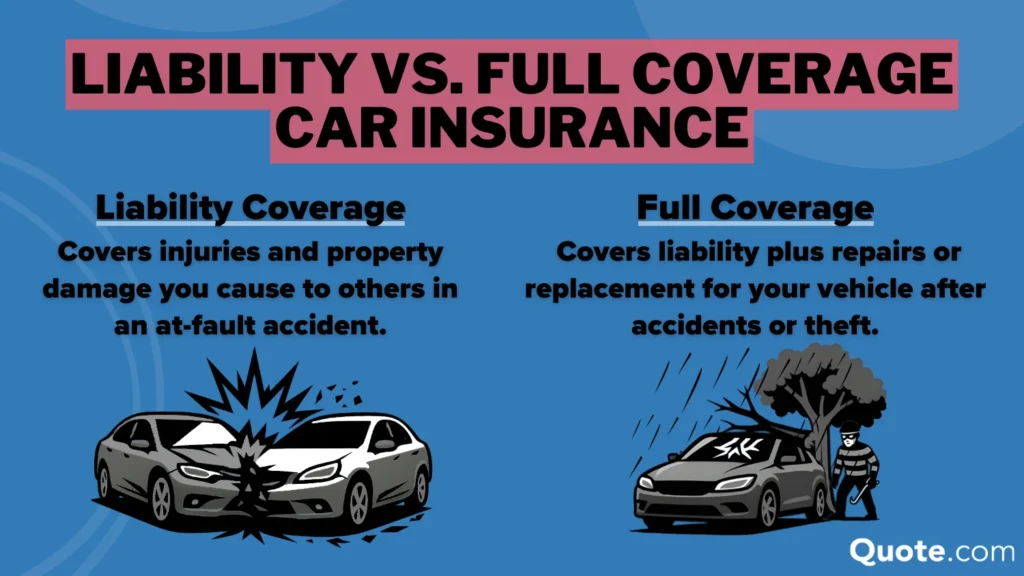
1.1 Liability Insurance: Protecting Others (and Your Assets)
Liability is the foundation of any policy. When considering what does full coverage auto insurance cover, remember that liability is the only part required by law in almost every state.
- Bodily Injury Liability: Covers the medical bills and lost wages of people you injure in an accident.
- Property Damage Liability: Pays for repairs to the other driver’s car, or structures like fences and buildings that you may have hit.
- Legal Fees: If you are sued following an accident, your liability portion handles the cost of your legal defense.
1.2 Collision Coverage: Protecting Your Vehicle in Motion
The second part of the answer to what does full coverage auto insurance cover is collision. This kicks in regardless of who is at fault.
- Accidents with Other Cars: Whether you rear-end someone or get T-boned, collision covers your repairs.
- Single-Car Accidents: If you hit a guardrail, a tree, or even a deep 2026 pothole, collision insurance is what saves your wallet.
- Rollovers: If your vehicle flips due to road conditions or a sharp turn, collision pays for the replacement or repair.
1.3 Comprehensive Coverage: Protecting Your Vehicle at Rest
Often called “other-than-collision,” this is a vital part of what does full coverage auto insurance cover. It handles the “Acts of God” and unpredictable events.
- Theft and Vandalism: If your car is stolen or “keyed,” comprehensive coverage is your remedy.
- Weather Events: In 2026, with extreme weather patterns, this covers damage from hail, floods, wildfires, and hurricanes.
- Animal Strikes: If a deer jumps in front of your car, comprehensive (not collision) is the coverage that applies.
- Falling Objects: A tree branch falling during a storm or a rock hitting your windshield is covered here.
Section 2: The “Shadow” Inclusions — What Else Does Full Coverage Auto Insurance Cover?
Depending on your state and the year 2026 regulations, the answer to what does full coverage auto insurance cover often includes these additional, highly valuable layers of protection.
2.1 Uninsured/Underinsured Motorist (UM/UIM)
Despite legal requirements, many drivers in 2026 still lack adequate insurance.
- The Gap Filler: If you are hit by a driver with no insurance, UM coverage pays for your injuries and car repairs.
- The Limit Booster: If the at-fault driver has “minimum” insurance that doesn’t cover your $50,000 medical bill, your UIM coverage pays the difference.
2.2 Medical Payments (MedPay) or PIP
When asking what does full coverage auto insurance cover, don’t overlook Personal Injury Protection (PIP).
- No-Fault Medical: PIP pays for your medical bills regardless of who caused the accident.
- Lost Wages: In many 2026 policies, PIP also covers a portion of your income if you cannot work due to accident-related injuries.
Section 3: What Full Coverage Auto Insurance DOES NOT Cover
A critical part of knowing what does full coverage auto insurance cover is knowing its limits. No policy covers everything.
| Common Exclusion | Why It’s Not Covered | How to Get Coverage |
| Wear and Tear | This is a maintenance issue, not an “event.” | Regular servicing. |
| Mechanical Breakdown | Engines failing due to age is not an accident. | Extended Warranties/MBI. |
| Personal Items | Your laptop stolen from the car isn’t “auto.” | Homeowners/Renters Insurance. |
| Racing or Stunts | Illegal or high-risk activity voids the policy. | Specialty Racing Insurance. |
| Ride-Sharing (Uber/Lyft) | Personal policies exclude commercial use. | Ride-share Endorsement. |
Section 4: The 2026 Value Proposition — Is It Worth It?
If your car is worth more than $5,000, the answer to what does full coverage auto insurance cover makes it a “must-have.” In 2026, the average cost of a “full” policy is approximately $2,697 per year, but the peace of mind it provides against a $40,000 total loss is immeasurable.
4.1 The Lender Requirement
If you are financing or leasing your car in 2026, your lender will mandate a specific answer to what does full coverage auto insurance cover. They will require both collision and comprehensive with deductibles usually no higher than $500 or $1,000 to protect their asset.
Section 5: 10 Essential FAQs — What Does Full Coverage Auto Insurance Cover?
1. Does full coverage auto insurance cover my car if it’s stolen?
Yes, provided you have the comprehensive component. This is a primary part of what does full coverage auto insurance cover.
2. Does full coverage cover engine failure?
Generally, no. What does full coverage auto insurance cover excludes mechanical breakdowns due to wear and tear. You would need “Mechanical Breakdown Insurance” for this.
3. Does full coverage cover windshield cracks?
Yes. Under the comprehensive portion, glass repair or replacement is covered. Many 2026 insurers offer $0 deductible glass coverage as an add-on.
4. Does full coverage pay for my medical bills?
If your policy includes MedPay or PIP, then yes. This is often an optional but recommended part of what does full coverage auto insurance cover.
5. Is a rental car included in full coverage?
Not automatically. While your liability might extend to a rental, “Rental Reimbursement” (paying for a car while yours is in the shop) is an add-on.
6. Does full coverage cover me if I hit an animal?
Yes. Hitting a deer or other animal is covered under the comprehensive section of what does full coverage auto insurance cover.
7. Does full coverage cover custom wheels or paint?
Usually, standard policies only cover “factory” equipment. You need a “Custom Parts and Equipment” (CPE) endorsement to cover modifications.
8. What happens if I’m at fault? Does full coverage still pay?
Yes! The collision part of what does full coverage auto insurance cover pays for your repairs even if you caused the accident.
9. Does full coverage cover my car in a flood?
Yes, flood damage is a standard inclusion in the comprehensive portion of what does full coverage auto insurance cover.
10. How do I know if I actually have full coverage?
Check your “Declarations Page.” If you see Liability, Collision, and Comprehensive all listed with active premiums and deductibles, you have “full coverage.”
Section 6: Conclusion — Master Your Coverage in 2026
Understanding what does full coverage auto insurance cover is the first step toward financial security on the road. By combining liability, collision, and comprehensive protections, you create a safety net that handles everything from 2026 superstorms to minor fender-benders. While it costs more than a basic liability policy, the breadth of what does full coverage auto insurance cover ensures that a single bad day doesn’t result in a lifetime of debt. Review your policy today, ensure your deductibles match your savings, and drive with the confidence that only full coverage can provide.